
The Eve of the Revolution has new meaning as we prepare to resist in a critical battle against imperialism in the Western Hemisphere. As 2025 ends and a new year begins, a desperate belligerent US imperialism imposes a naval blockade that threatens the sovereignty of Venezuela, South America, and the Caribbean. A blockade that challenges Brazil, Russia, China, India, Iran, Azania/South Africa and other (BRICS) nations’ rights to trade with their partners in the Global South.
As we once again on January 1 commemorate two of the greatest revolutions in Turtle Island aka the Western Hemisphere, and more particularly the Caribbean Islands, we remember Haiti and Cuba: https://aaprp-intl.org/everevolution-haiti-cuba-pan-africanism-internationalism/
The Haitian Revolution, 1804, liberated all enslaved people on the island of Hispaniola. The indigenous people called the island Ayati.
The island is separated by mountains, The French occupied what today we call Haiti and the Spanish occupied the other side of Hispaniola, now called the Dominican Republic. Haiti became the first successful National Liberation in the Americas, where all people were free, the first successful Pan-African Revolution in the era of European settlercolonial expansion. Haiti fought successfully against the French, the Spanish and the British.
Cuba was a settler-colony of Spain, the island had countless African rebellions against slavery (like the one led by Sister Colada) https://www.afrocubaweb.com/carlota.htm This Island of the indigenous Tainos resisted their Spanish invaders. These struggles paved the way for the national liberation movement against Spain, led by great figures like Hosea Marti and Antonio Maceo. Maceo refused to allow Cuba’s national liberation against Spain to be separated from the Cuban African population’s liberation from slavery. There was no compromise. The US, under the Platt amendment in 1901, imposed a neo-colonial state on Cuba after the Spanish-American war, severely limiting Cuban sovereignty. A new era of national liberation struggle began with renewed vigour, including Communists, socialists, nationalists, urban and rural workers, peasants, students and women. In 1953, the July 26 Movement struck against the Mocada Barracks, though unsuccessful it shook the Barista regime and laid the foundation for the armed phase of revolution in Cuba.
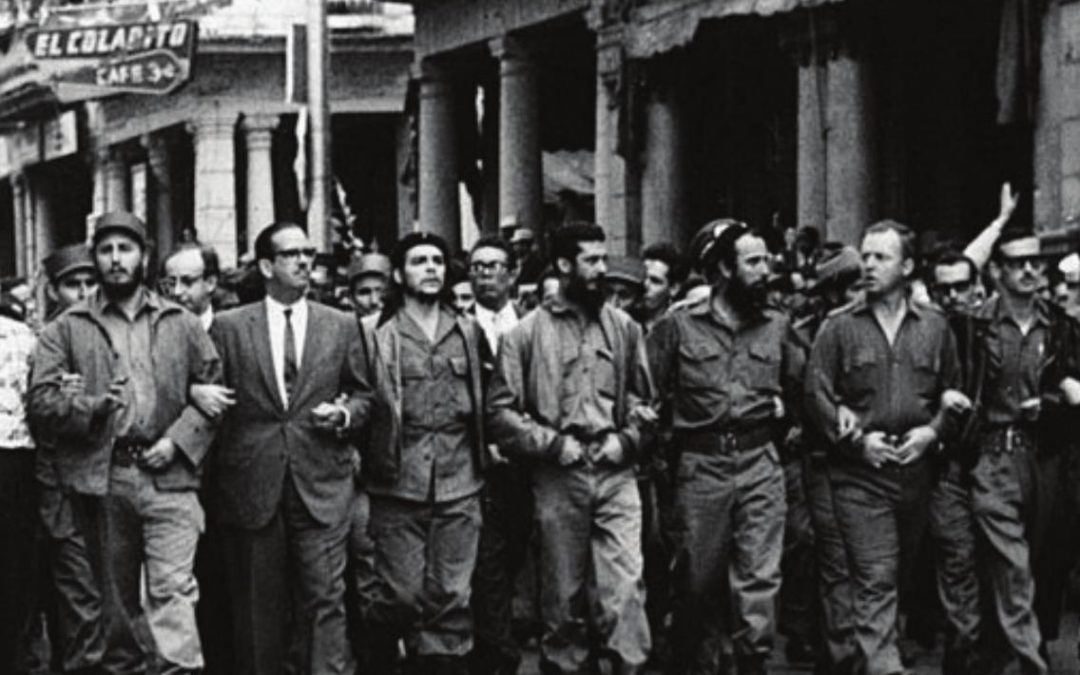
On January 1 1959, the Cuban revolution defeated US neocolonialism, bringing forth the first Socialist State in the Hemisphere.
Venezuela is historically linked to both these revolutions. Haiti gave human and material support to Simon Bolivar during the national liberation struggles in South America against Spain in the 1800s. They asked but one thing; liberate the enslaved.
During the Venezuela Revolution under Hugo Chavez, Cuba provided medical and social workers to aid underserved Venezuelan communities. Venezuela helped to supply much needed oil to Cuba and its neighbours under the PetroCaribe program. Cuba and Venezuela formed the Bolivarian Alliance for the Peoples of Our Americas (ALBA) and the Community of Latin American and Caribbean States (CELAC) alternatives to the Imperialist dominated Organisation of American States (OAS).
During the devastating 2010 earthquake in Haiti that killed more than 200,000 people, Cuba sent more than 1,000 doctors to save Haitian lives and Venezuela sent millions of Bolivars in aid. Chavez cancelled all of Haiti’s debt to Venezuela. He stated he did it in the spirit of Haiti’s contributions to Simon Bolivar and Bolivarian struggles in South America.
During this same earthquake, the United States sent the military to protect property and precious minerals while Haitians were dying in the streets.
The US history in Haiti and Cuba give us tremendous insight into US imperialism in the region. Haiti was boycotted by several European powers in the 1800s. It was isolated and boycotted by the United States starting from when it was under Thomas Jefferson. Haiti was not recognised by the US until 1862, some 58 years after Haitian independence in 1804.
The US military occupied Haiti from 1915 to 1934. They robbed Haiti of its gold reserves, transferring their gold to the National City Bank, the modern day Citigroup.
They backed dictators like Jean Claude Duvalier and his son. When the people democratically elected Jean Aristide in 1994 and again in 2004 the US engineered his forcible removal using their local proxies in 1991 who couldn’t defeat him in an election. Aristide was kidnapped a second time in 2004 and forced into exile for eight years in Azania/ South Africa. He was denied entry not only to Haiti but to any part of the Caribbean. Yet Haitian resistance against US Imperialism continues.
Cuba was embargoed soon after their revolution in 1959. In 1962 Cuba was under a blockade by the United States, preceded by the ‘Bay of Pigs’ invasion conducted by USsponsored mercenaries in April 1961. Cuba has survived over 200 assassination attempts on Fidel Castro and a US economic blockade for over six decades because of international solidarity and the unshakable people’s defence of the Revolution. Cuba has offered unconditional solidarity to the world against imperialism. From armed resistance in Angola, Mozambique, Congo and Namibia to Cuba’s armies of doctors serving the Global South countries throughout the world, the Caribbean, Africa and even in Europe during the Covid-19 pandemic.
After the revolutionary election in 1999, Venezuela drew the wrath of Imperialism. In 2002, Chavez survived a coup attempt supported by the United States, who recognised the illegitimate junta government immediately https://youtu.be/J1k065Qe9lE?si=v4VHxqDnzqJ_5nbIv. But within days the people returned Chavez to power. The PSUV has successfully defended their people’s power through several election cycles including the recent reelection of President Maduro in 2024, which US Imperialism again sought to overturn. Venezuela has endured attempted coups, regime change attempts, and assassinations. Their gold was frozen in British banks. Venezuela oil revenues were stolen in the United States. Venezuela was declared a special threat to the United States under President Obama. Yet, Venezuela still stands.
On this “Eve of the Revolution”, we must stand with Venezuela and the Global South. We must stand against Western Imperialism in Africa, in support of the PAIGC PAI TERA RANKA Coalition, and PRS in Guinea Bissau and the Sahel Alliance of Burkina Faso, Mali and Niger. We must stand with the people of Western Sahara. In Asia we must stand with Palestine and the axis of resistance. These are the front lines. The settler-colonial United States has gathered at the doorstep of Venezuela. Let us gather on this “Eve of the Revolution” as the Haitians did August 14, 1791 and in the spirit of the July 26 Movement of 1953 in Cuba. The Venezuela Bolivarian Revolution is a product of struggle against imperialism in the Western Hemisphere, from the indigenous and African resistance to the Haitian and Cuban Revolutions.
Forward to a new year of the people’s struggle in 2026.
Victory is Certain!
Revolutionary leader Fidel Castro (center, in military fatigues) marches through the streets of Havana with fellow guerrilla fighters and supporters following the triumph of the Cuban Revolution in January 1959, marking the fall of the Fulgencio Batista regime and the emergence of a new revolutionary government.
